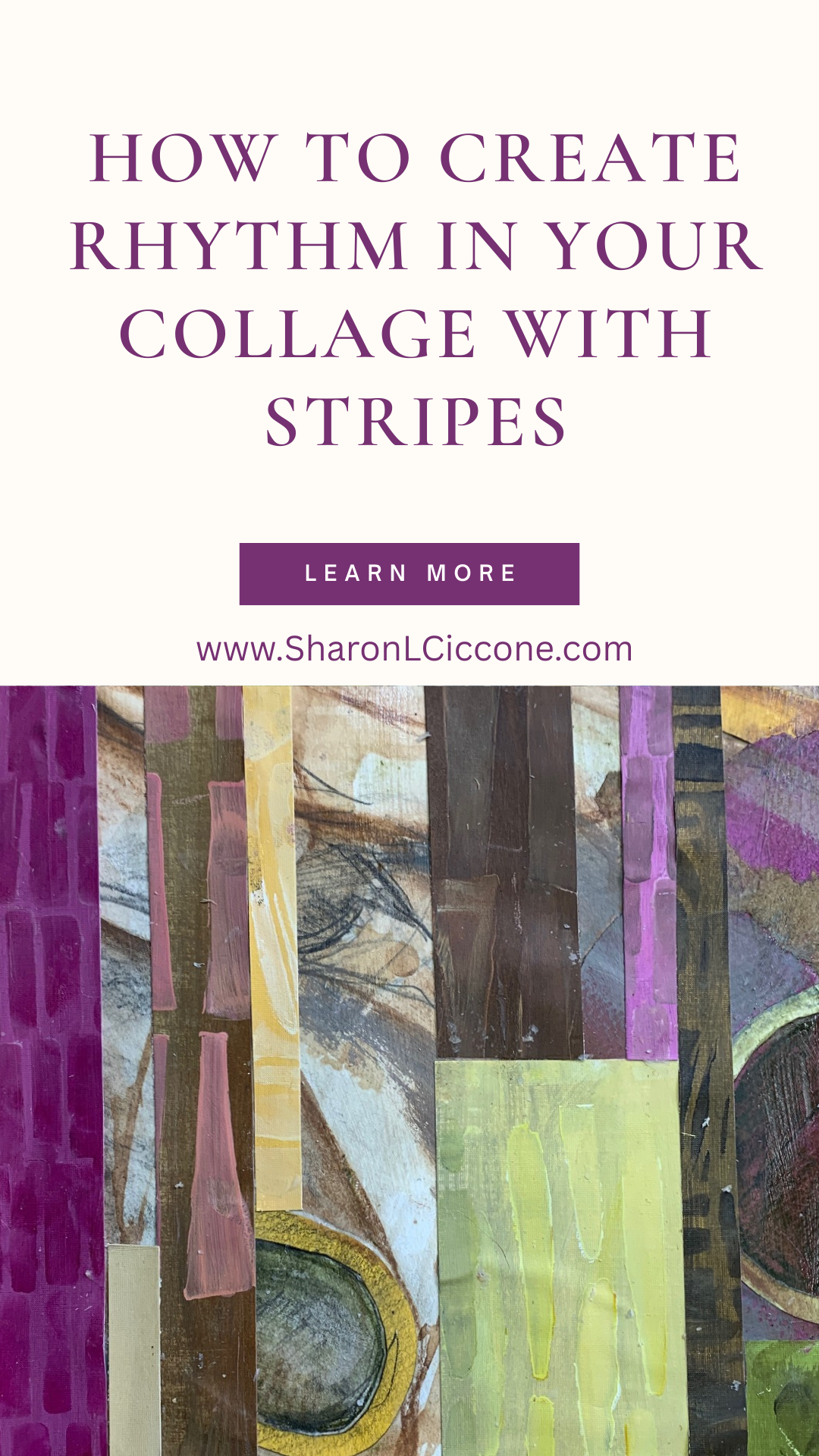
How to Create Rhythm in Your Art with Stripes
In this week’s Monday Marks Studio Vlog, I’m exploring how geometric collage strips can bring structure and rhythm to an organic mixed media background.
Starting with a layered surface built from collaged sketches, drawings, and painted marks, I paint papers in a coordinated palette and cut them into strips. These geometric elements are then collaged across the surface to create movement, contrast, and unity while allowing the earlier layers to remain visible.
This simple mixed media strategy is a powerful way to organize expressive backgrounds and add visual rhythm to your artwork.
Whether you work in mixed media, collage, or acrylic painting, this technique can help transform layered surfaces into cohesive compositions.
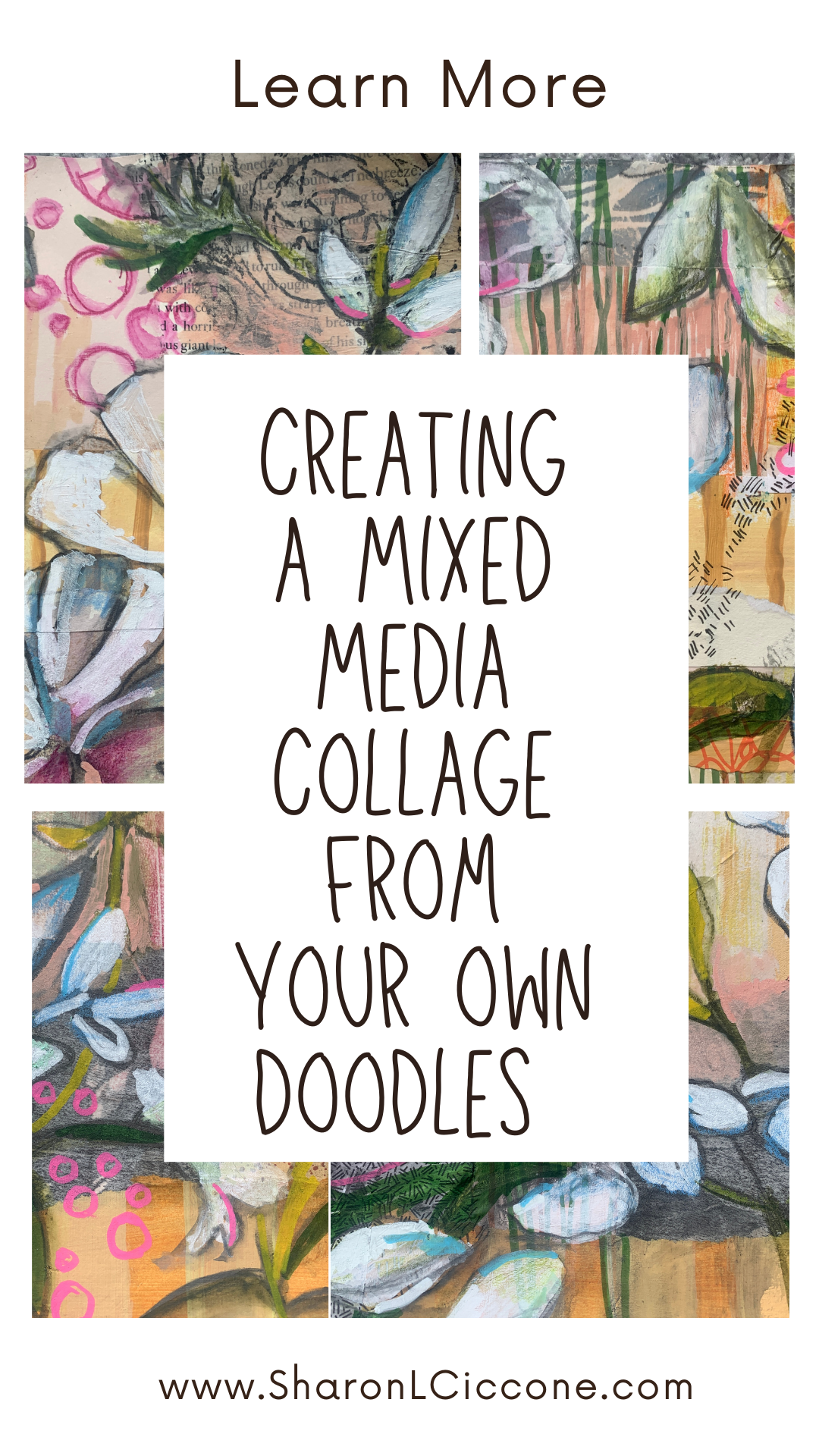
Creating a Mixed Media Collage from Your Own Doodles
In this week’s Monday Marks, I explore how spontaneous doodles can become the foundation for intentional mixed media collage. By scanning or tracing intuitive marks and rebuilding them with hand-painted papers, artists can transform quick gestures into carefully composed artworks. This approach balances playful exploration with deliberate labor, helping artists discover patterns, rhythms, and shapes that naturally emerge in their personal mark language.
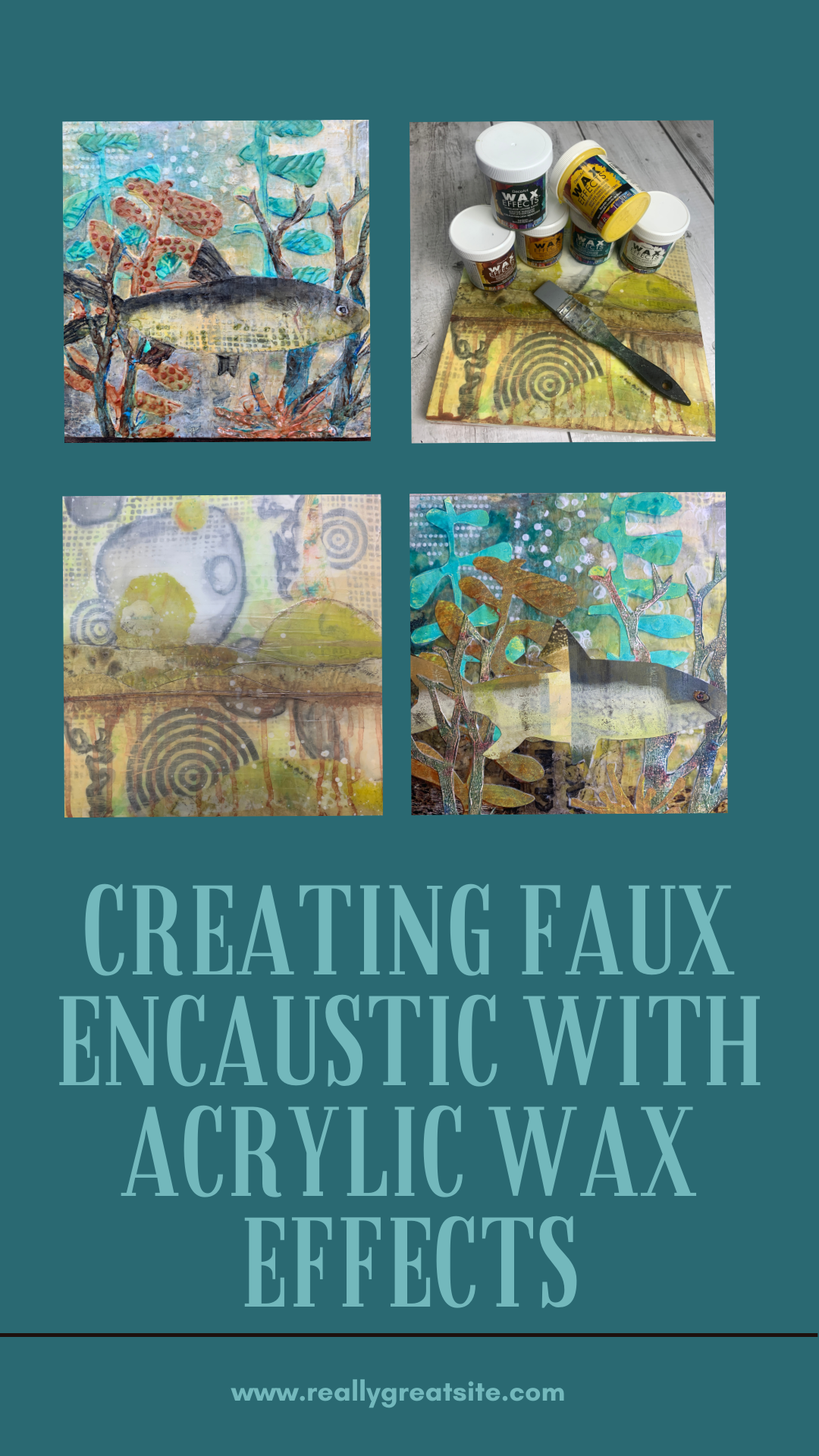
Creating Faux Encaustic with Acrylic Wax Effects
In this week’s Monday Marks Vlog, I revisit an artwork I abandoned years ago and give it new life using Wax Effects acrylic paint. I demonstrate how to build transparent waxy glazes and textures over both opaque and translucent collage layers using hand-painted wet strength tissue paper and matte medium. This faux encaustic technique is perfect for artists who love layered mixed media surfaces and want to unify older work without starting over.
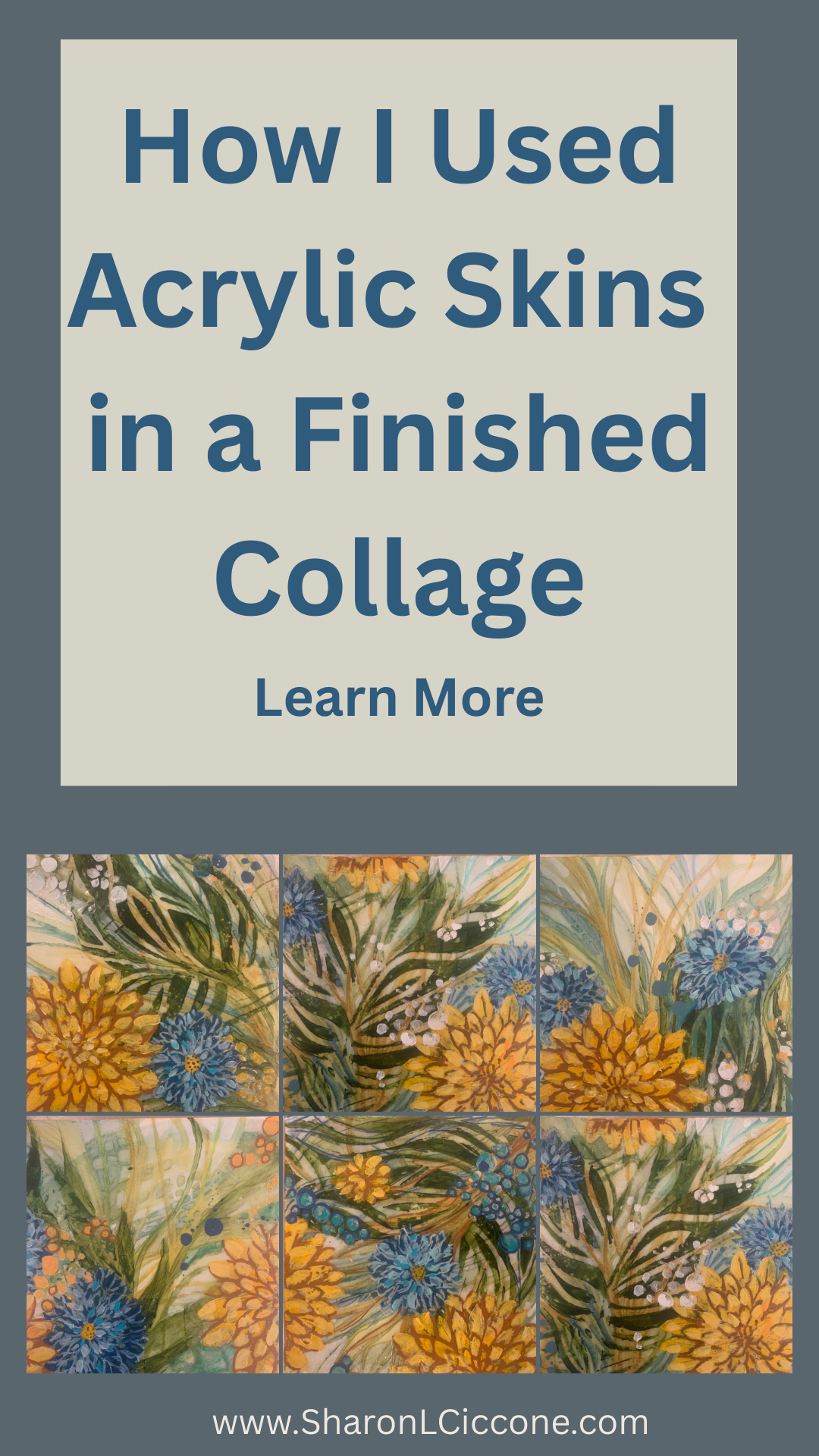
How I Used Acrylic Skins to Create a Finished Collage
This week’s Monday Marks Vlog builds on last week’s large acrylic skin pull from the Gelli plate. Now that the skins have been collaged onto the background, we’re moving into the part every artist wants to understand: how to actually finish the piece. Today’s focus is on refining the collage with intentional paint layers, expressive mark-making, and finally leveling and unifying the surface with pouring medium. This is where all those earlier experimental layers come together and become a cohesive, resolved artwork.
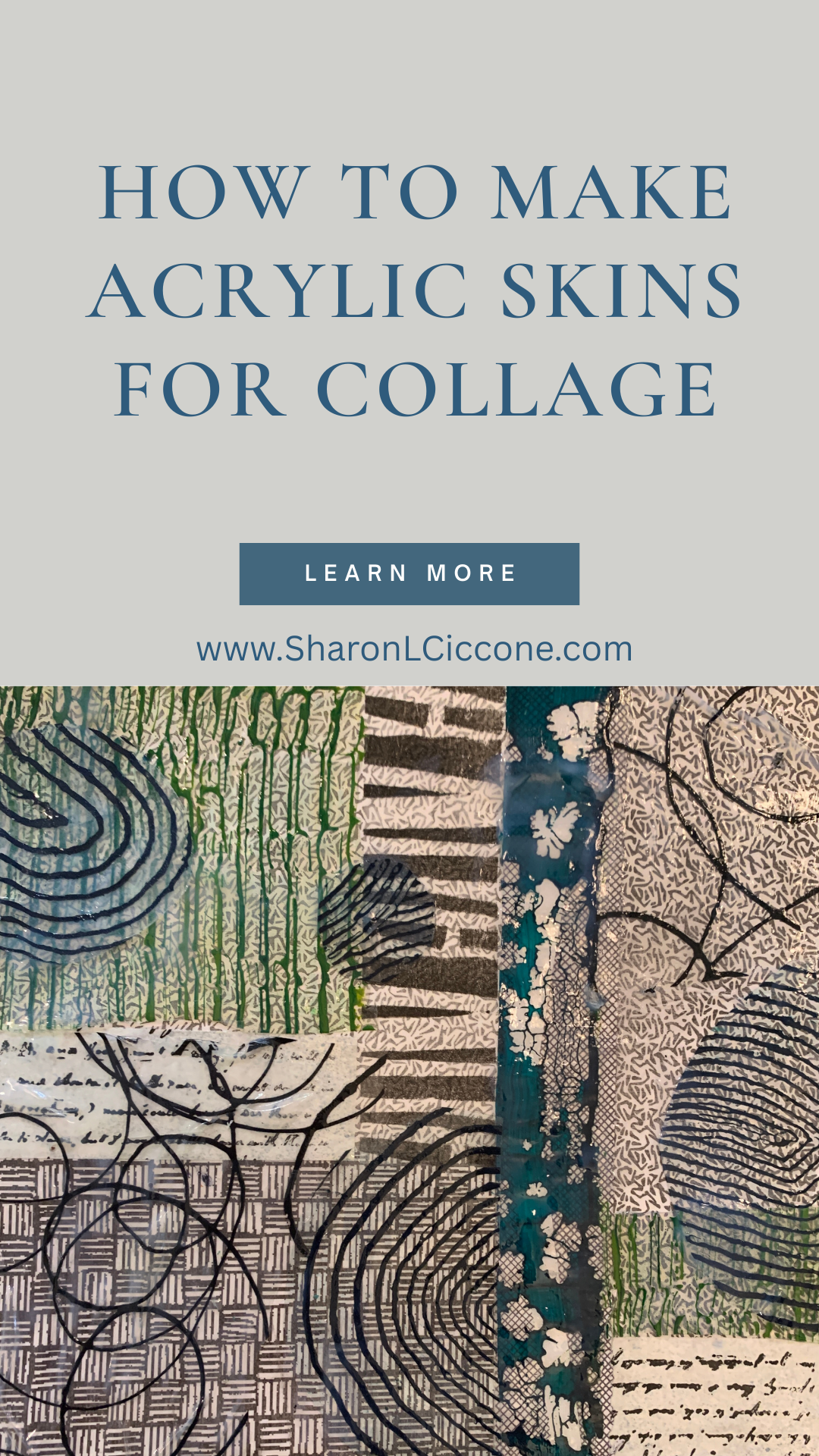
How to Make Acrylic Skins for Collage
In this week’s Monday Marks Vlog, I’m making acrylic skins for collage using High Flow Acrylics, Gloss Medium, and simple tools like a silicone mat and fine liner bottle. In this video, I’ll show you how to create transparent patterned skins that you can peel, cut, and collage into your mixed media artwork.
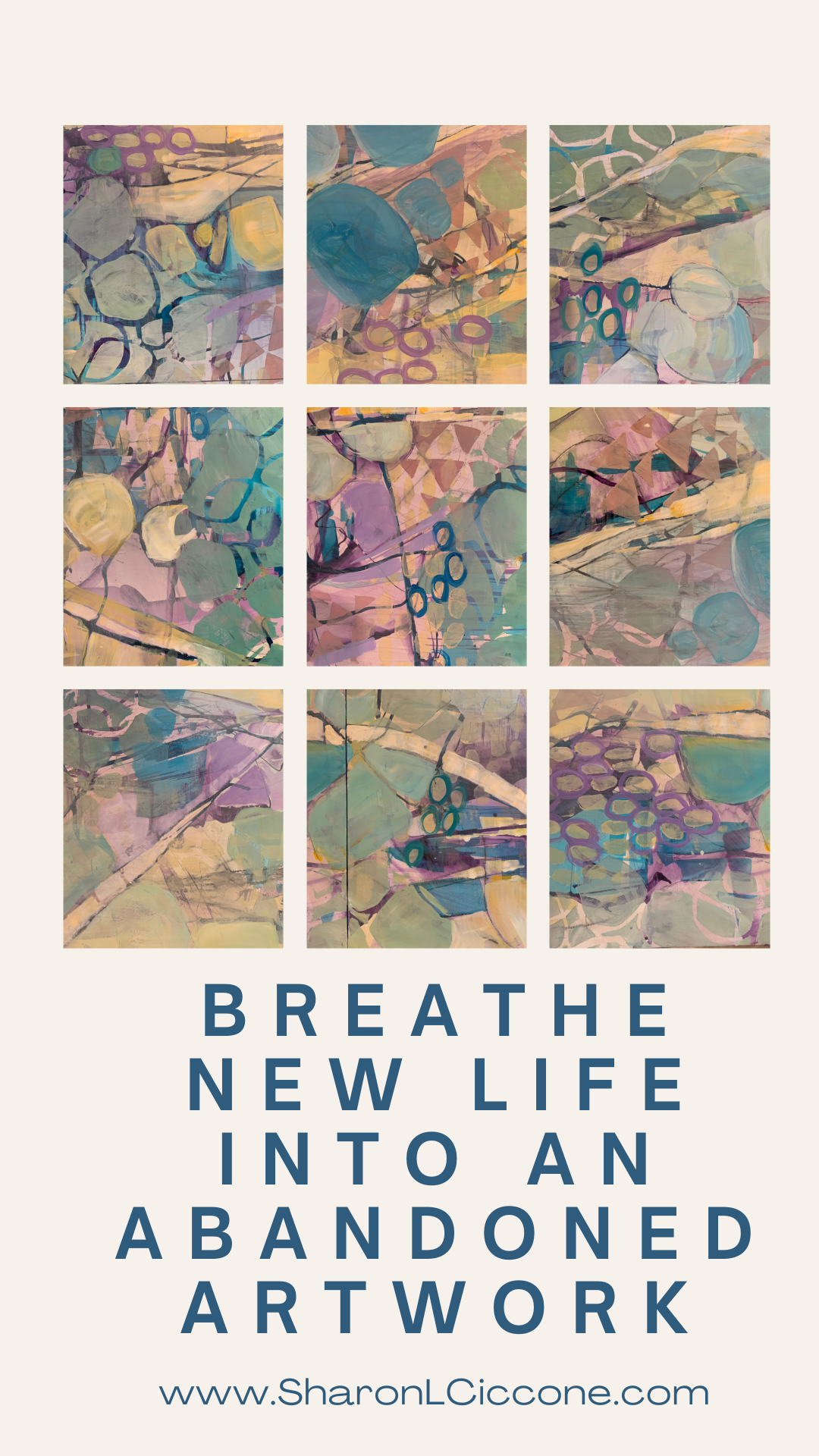
Breathe New Life Into Abandoned Artwork
In this week’s Monday Marks Vlog, I’m revisiting nine forgotten cradled panels and transforming them into a single unified composition. You’ll learn how to renew your creative energy and refresh your process through two strategies: Layer Time – keeping traces of the old while building something new Combine the Forgotten – uniting multiple unfinished works to discover surprising connections Watch as I demonstrate how to layer, connect, and reimagine past pieces—turning procrastination into playful possibility. In this episode you’ll learn: How to revisit old work with curiosity instead of judgment Ways to layer transparently and preserve previous marks How to combine multiple surfaces into one cohesive composition Reflection prompts to help renew your artistic vision
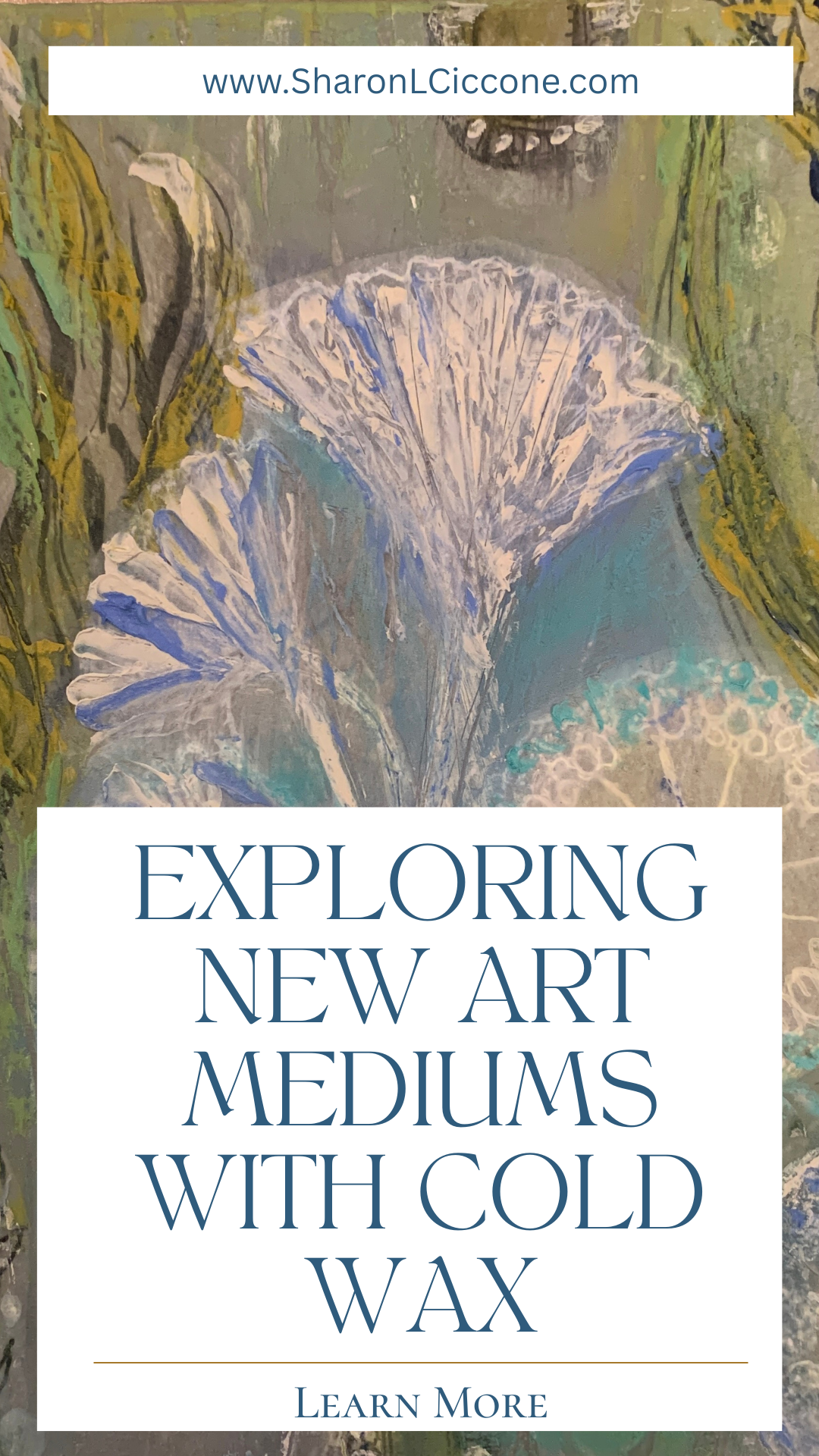
Exploring New Art Mediums with Cold Wax
In this week’s Monday Marks Vlog, I’m diving into something totally new — cold wax medium! Join me as I explore how it interacts with transparent collage, tar gel, pan pastel, and R&F pigment sticks. This mixed media experiment is all about play, curiosity, and discovering new surfaces that transform how light, texture, and color behave. If you’ve been thinking about trying cold wax or mixing new materials into your art, this video will show you what happens when you combine transparency, texture, and matte depth..
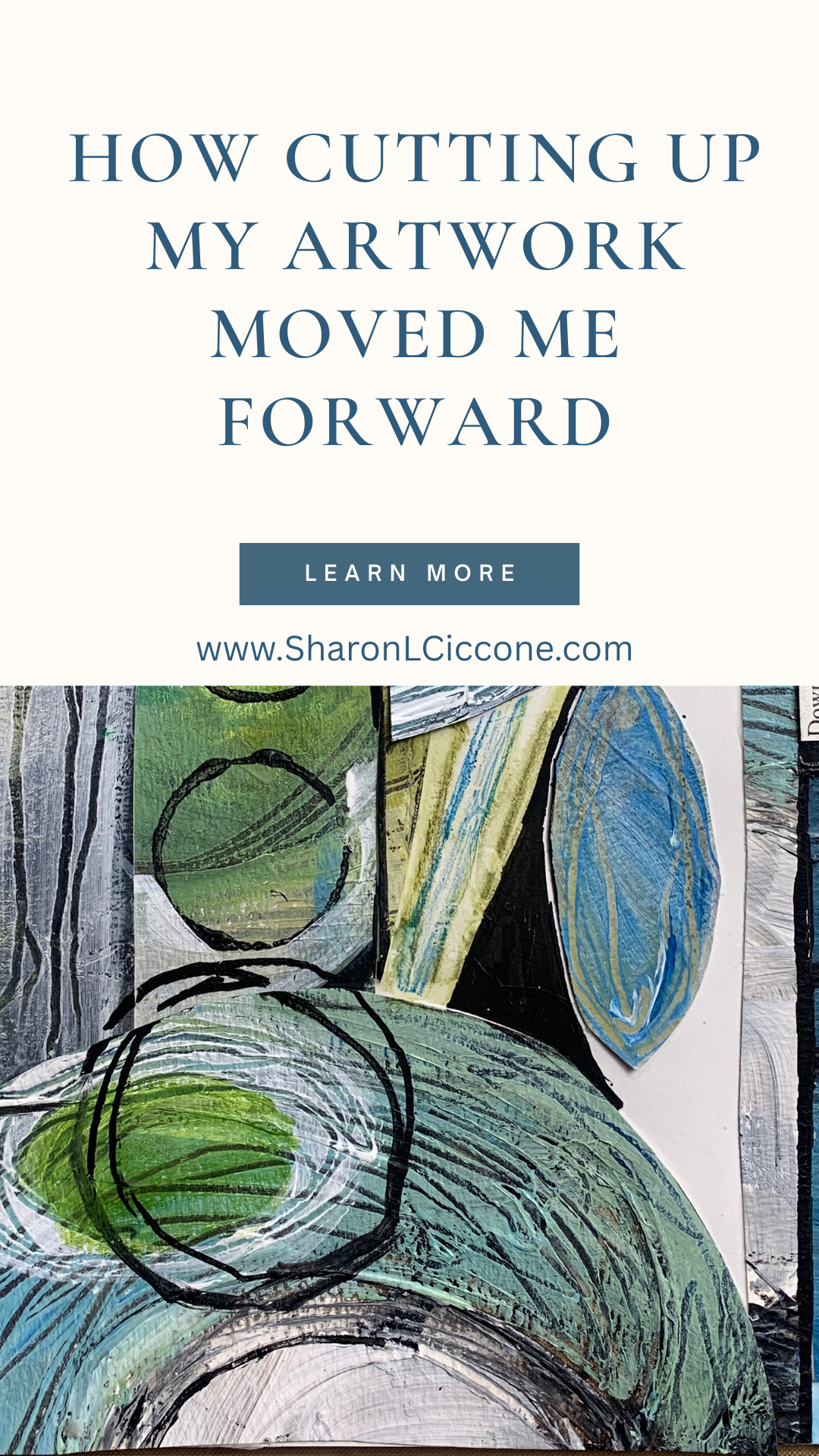
How Cutting Up My Artwork Moved Me Forward
In this Monday Marks Vlog, I explore Cut and Assemble as both a collage technique and a creative mindset. Working with four abandoned mixed media pieces, I cut out the sections that still felt alive and assembled them onto a smaller surface. This shift allowed me to continue marks and colors intuitively, respond to negative space, and integrate newly made collage papers that reflect my current artistic voice.
This process is about editing with intention, letting go of what isn’t working, and rebuilding artwork through response rather than force. It’s an approach that gives artists permission to release the original plan and trust what wants to emerge next.
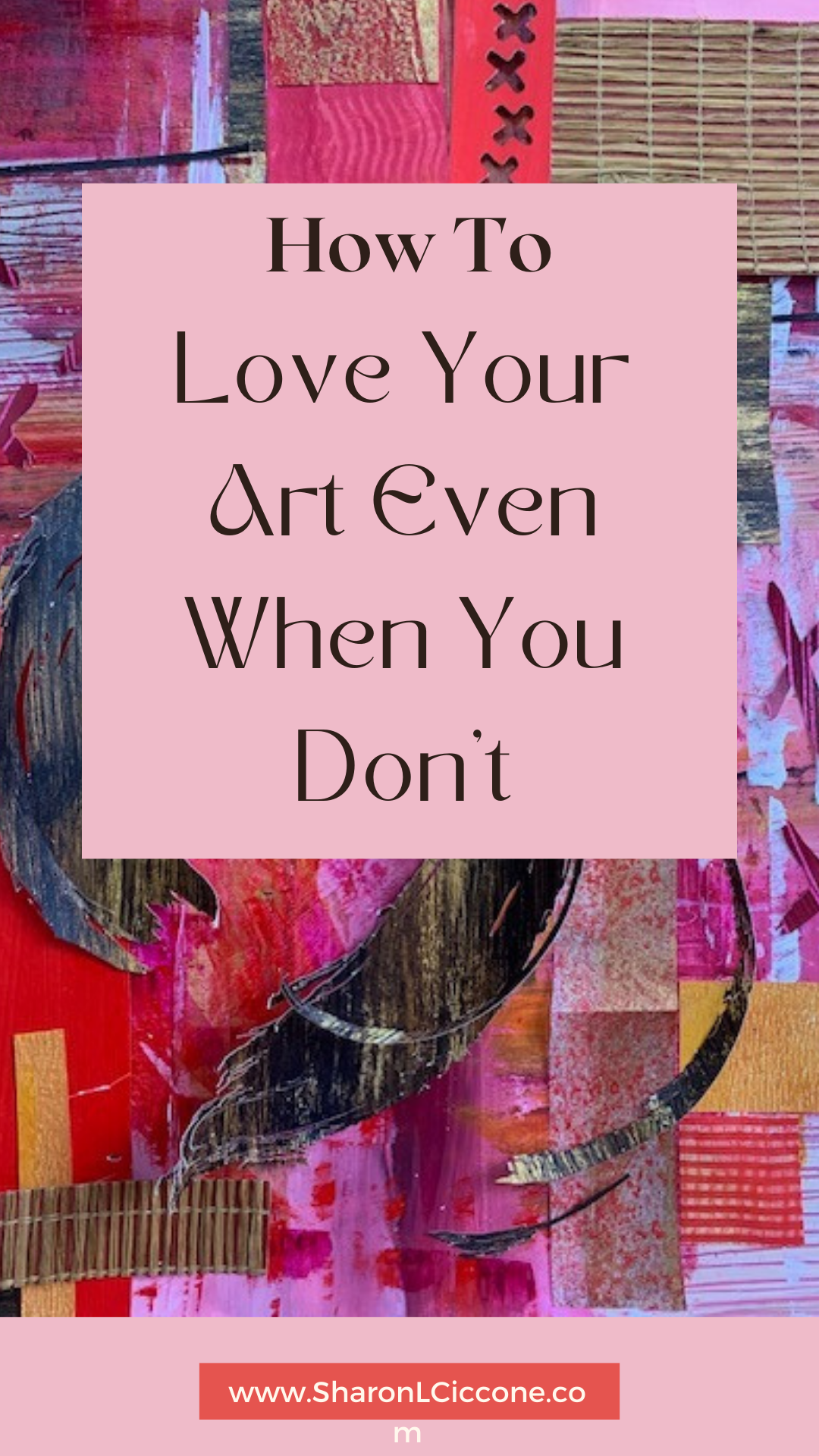
Loving Your Art Even When You Don’t
In this Monday Marks Vlog, I explore how to continue working on an abandoned mixed media surface by committing to process over emotion. Through symbolic collage, limited color, and repetition, this video offers artists a practical and thoughtful approach to navigating doubt in your creative practice.
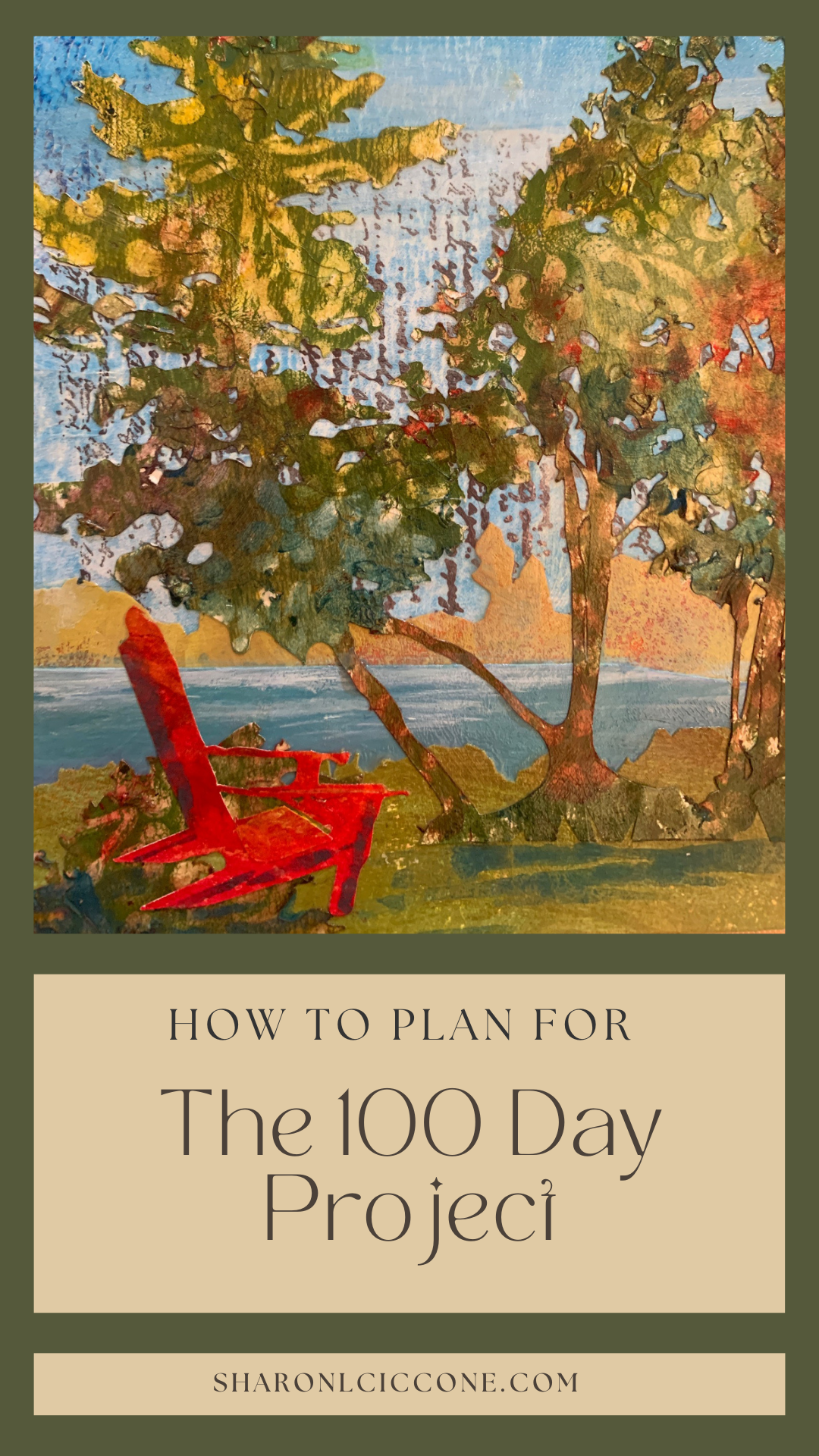
How to Plan for the 100 Day Project
In this week’s Monday Marks Vlog, I share my approach to planning her fourth 100 Day Project. After an overly ambitious year that went unfinished, I am shifting my focus toward sustainability and production — creating 100 original mixed media greeting cards inspired by the Adirondacks for my artist residency at Great Camp Sagamore. Learn how to decide whether your project should focus on play, practice, or production and how to use repetition, hand-painted papers, simple marks, and layout strategies to create a cohesive series.
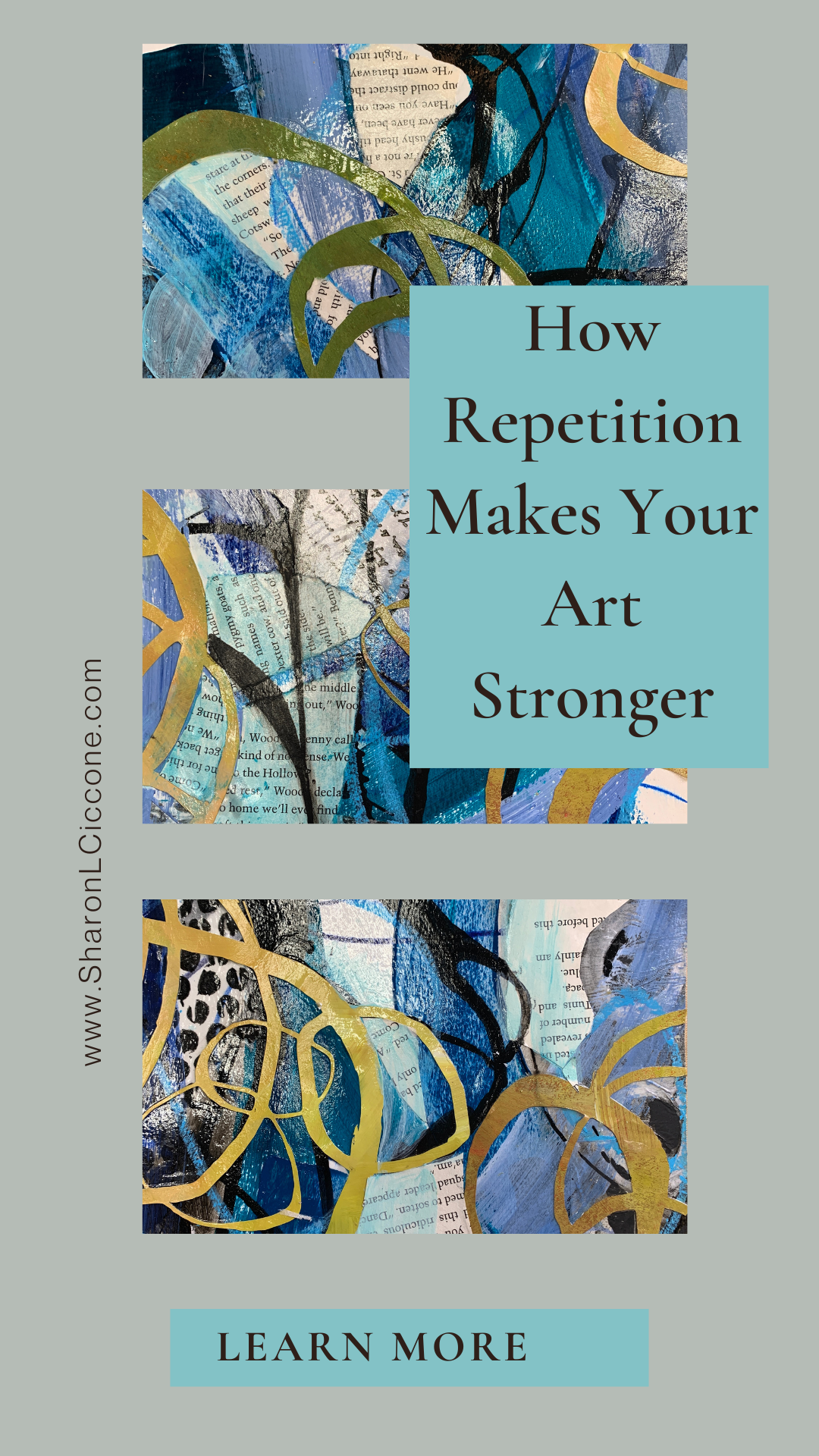
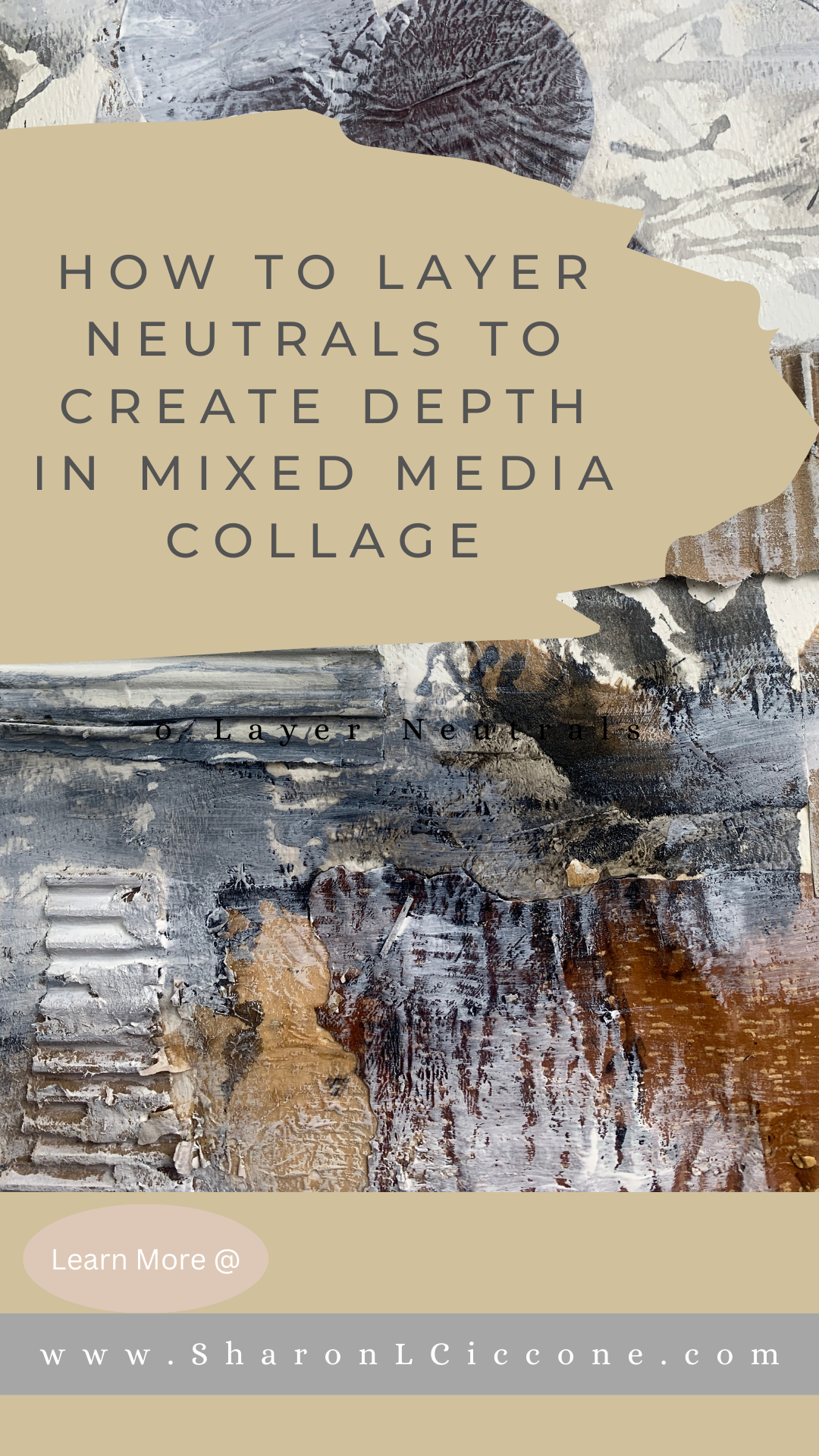
How to use Neutrals to Create Depth in a Mixed Media Collage
Working with a neutral palette can strengthen composition, build cohesion, and develop a more intentional mixed media collage practice. Through mixing custom neutral paints, creating layered collage papers, and building a composition using value first, this episode demonstrates how restraint can lead to more powerful and meaningful artwork.

When the Path Isn’t Clear: How Following Small Steps Leads to Big Discoveries in Your Art
There are seasons in every artist’s practice when the way forward feels uncertain. You may feel stuck, unsure of your direction, or overwhelmed by too many ideas pulling you in different directions. This is a natural part of the creative journey.
In these moments, it can be tempting to wait for clarity to arrive before taking action. But often, clarity emerges through the act of doing—through small, consistent steps. Following the next mark, the next layer, the next piece of paper—however small—can lead you toward discoveries you never could have planned.
When the path isn’t clear, the key is to trust the process and follow what feels alive, even if you can’t yet see the full picture.

From Frozen Stillness to Fluid Movement: Evoke Powerful Emotions in Your Work
Art is a dynamic expression of emotion, and the concepts of freeze and thaw offer an evocative way to explore this range. Freeze captures moments of stillness, rigidity, and constraint, while thaw represents the release of those tensions—transforming a frozen state into fluid movement.
In this blog, we’ll dive into how you can harness these contrasting forces to create a powerful emotional experience in your work. Whether you’re evoking the cold isolation of stillness or the warmth and freedom of thawing, these two prompts allow you to express emotional depth and movement in your artwork.

The Art of Repair: Honoring Imperfections in Your Artwork
Cracks and imperfections are an inevitable part of the creative process, but they don’t have to signal failure. Instead, they can be embraced as opportunities to add depth and character to your artwork. The art of repair is about honoring these cracks—whether they appear in your materials, your techniques, or your vision—and transforming them into intentional and meaningful elements of your work. Through layering, collaging, or revising, repairing what feels broken can lead to unexpected beauty and a richer story. The act of repair can not only salvage your artwork but elevate it, celebrating the unique journey of each piece.

How to Embrace Both Resolve and Hesitation in Your Art Journey
In the world of art, the creative journey often feels like a dance between decisiveness and doubt. There are moments when you must move forward with clarity and purpose—resolved to bring your vision to life. But equally, there are times when hesitation offers the space to pause, reflect, and explore new possibilities. Embracing both resolve and hesitation is key to creating meaningful work. When you learn to navigate the tension between them, you can find balance, depth, and authenticity in your artistic practice. In this post, we’ll explore how both decisiveness and doubt shape your work and how you can harness them to create art that resonates deeply with both yourself and your audience.

When to Finish and When to Quit: How to Use Completion and Abandonment to Improve Your Art Practice
As artists, we’ve all faced the dilemma: when is a work truly finished, and when is it time to let go? This question lies at the heart of every creative process. Balancing completion and abandonment is not just about making decisions—it's about knowing yourself, your intentions, and your artistic journey.
Below are five signs that signal when to finish a work of art and five indicators it’s time to quit. By reflecting on these ideas, you’ll gain the tools to refine your artistic practice and find freedom in both resolution and release.

10 Creative Ways Artists Can Appreciate Nature Through Their Work.
As the seasons shift and we embrace the gratitude of Thanksgiving and the warmth of the holiday season, it's the perfect time to pause and appreciate the natural world around us. From the delicate patterns of a frost-covered leaf to the grandeur of a golden sunset, nature provides endless opportunities to connect deeply and express that appreciation through art. In this blog, we’ll explore 10 creative ways artists can honor and celebrate nature in their work, turning gratitude into a source of inspiration

Burn and Extinguish: Nature’s Cycle as a Catalyst for Creativity
The prompts Burn and Extinguish invite you to explore powerful dualities that reflect both life and your creative process. They challenge you to think about contrasts—creation and destruction, energy and stillness, presence and absence—and how these forces shape your art. Fire and extinguishment carry deep emotional and symbolic weight, representing passion, transformation, loss, and renewal. As you work with these prompts, you can tap into universal experiences while also telling your own personal story. They encourage you to reflect on your process: when to build intensity, when to simplify, and when to let go. The visual and textural possibilities are vast, from fiery brightness and glowing warmth to soft transitions and muted calm, pushing you to experiment and discover new approaches. By exploring these themes, you can connect more deeply to the cycles of change and resilience in both nature and your own life, creating art that holds greater meaning and impact.

The Art of Rising and Falling: Techniques and Inspirations from Nature
Find ideas in the simple things around you, like the details of nature or everyday actions. The ideas of "lift" and "drop" are rich with potential for both media exploration and conceptual depth. They are oppositional in movement but interconnected in rhythm. Whether you are lifting a brush or watching a drop of ink spread into a bloom, both actions suggest an array of possible approaches to creating art.